
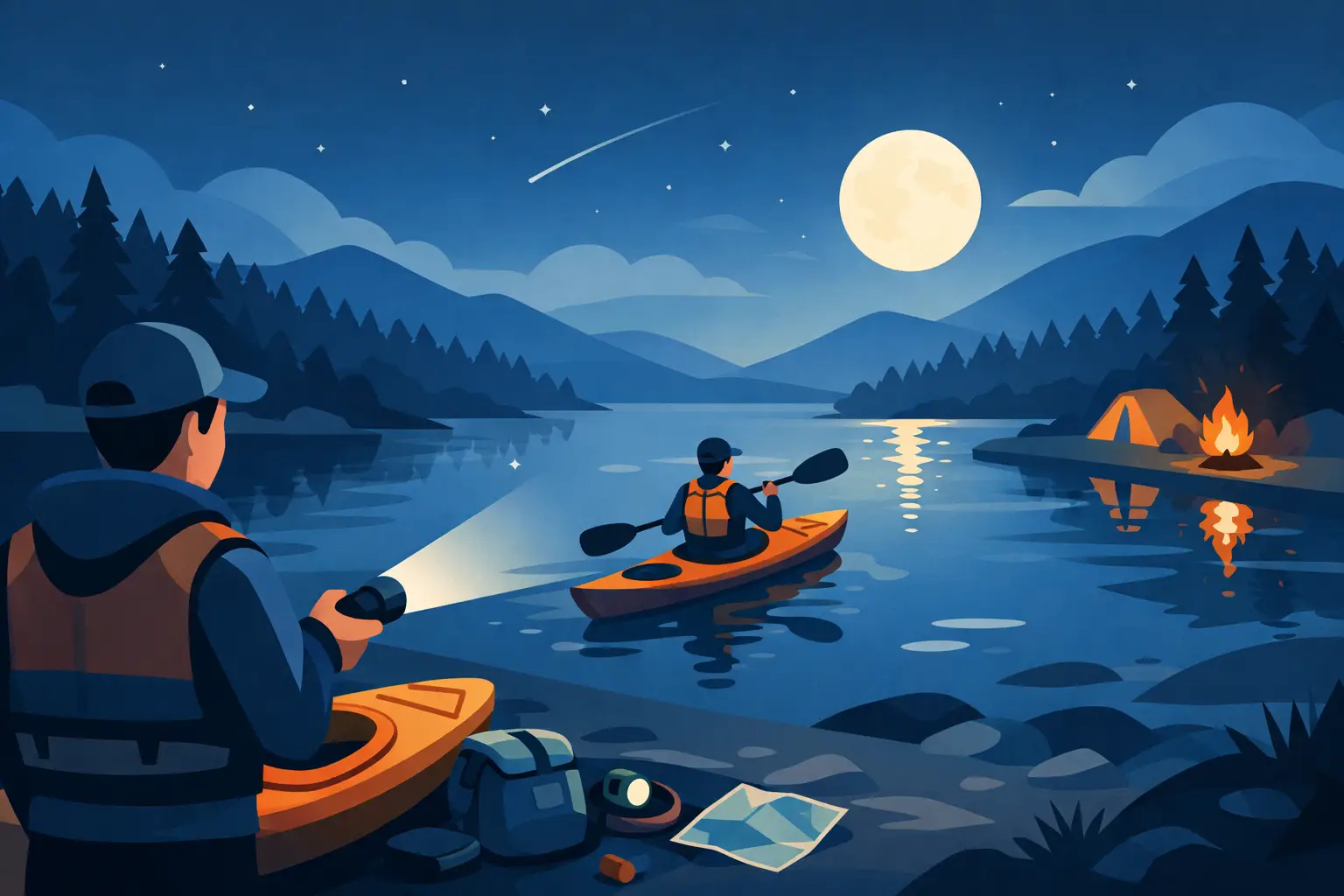

The shoreline feels different after sunset. Water turns glassy, distant lights shimmer across the surface, and every paddle stroke sounds sharper in the dark. That is exactly why so many travelers want to know how to prepare for night kayaking before they head out – because the experience is equal parts peaceful, thrilling, and unforgettable when you do it right.
Night kayaking can be remarkably accessible for beginners, but it is not something to approach casually. The difference between a magical evening paddle and a stressful one usually comes down to planning. You do not need expedition-level skills, but you do need the right conditions, the right gear, and a clear sense of what the water will feel like once daylight fades.
Why night kayaking feels different
Paddling after dark changes more than the view. Your depth perception drops, distances can feel misleading, and familiar landmarks look completely different from the water. Even calm bays can seem larger at night, and small sounds or passing boat wakes can feel more dramatic than they would in daylight.
That is part of the appeal. A guided evening paddle can feel intimate, scenic, and quietly luxurious, especially in clear Caribbean waters where the mood is as memorable as the activity itself. But it also means preparation matters more than people expect. If you are relaxed, dressed properly, and confident in your route, you are free to enjoy the glow of the coastline instead of worrying about every shadow on the water.
How to prepare for night kayaking before you leave shore
The smartest night kayaking prep happens long before the kayak touches the water. Start with the setting. Protected, calm water is ideal, especially if you are a casual paddler or on vacation trying the experience for the first time. Open water, strong current, heavy boat traffic, or unfamiliar launch points can turn a beautiful plan into a tiring one fast.
Weather deserves more attention than most people give it. Wind matters just as much as rain, sometimes more. A mild evening breeze on land can feel much stronger once you are exposed on the water, and returning against the wind after dark is rarely as charming as it sounds. Check conditions close to launch time, not just that morning.
You will also want to know the route in advance. At night, simple is better. A short out-and-back paddle or a guided loop in a known area is far more enjoyable than improvising. If you are traveling, this is one of those activities where booking with experienced local guides often adds real value. They know the water, the currents, the traffic patterns, and the small details that make guests feel looked after from the first safety briefing to the final glide back to shore.
The gear that matters most
You do not need to overpack for a night paddle, but a few essentials are non-negotiable. A properly fitted life jacket should be worn, not stashed behind the seat. Light sources matter too. Your kayak should be visible, and you should have a dependable personal light source even if the excursion includes illuminated equipment.
For many travelers, the most enjoyable version of this experience is a guided LED kayak tour, where the vessel itself creates a soft underwater glow. It adds atmosphere, helps with visibility, and makes marine life and the water below feel even more vivid. That said, decorative lighting does not replace safety lighting, so it is worth understanding the difference.
Clothing can make or break the evening. Dress for the water temperature and the breeze, not the warm feeling you had at sunset on the beach. Lightweight performance fabrics work best, and it is wise to expect a bit of splash. If you tend to get chilly, bring an extra layer you do not mind getting damp. Footwear should stay secure if you step into shallow water at launch or landing.
A waterproof pouch for your phone is useful, but night kayaking is one of those rare activities where you will enjoy yourself more if you are not reaching for your screen every two minutes. Bring what you need, keep it protected, and let the setting do the work.
Safety is the luxury part
The most polished water experiences never feel chaotic. They feel calm because the safety side has been handled well. That is especially true at night.
If you are going without a guide, never paddle alone. Tell someone where you are launching, where you plan to paddle, and when you expect to return. Stay close to shore if that is appropriate for the location, and avoid busy channels or areas with frequent motorized traffic. The darker it gets, the more valuable predictability becomes.
If you are joining a guided excursion, listen to the briefing even if you have kayaked before. Different coastlines, tides, and launch conditions all change the experience. A professional team will walk you through pacing, signals, spacing between kayaks, and what to do if you drift off line or feel uncomfortable. That structure does not take away from the adventure. It creates the freedom to enjoy it.
There is also a comfort factor that people do not always talk about. At night, small inconveniences feel bigger. An uncomfortable seat, a loose sandal, or skipped hydration can become distracting fast. Preparing well is not just about safety in the technical sense. It is about protecting the mood of the evening.
What beginners often overlook
One common mistake is eating too much right before launch. A heavy dinner and gentle wave motion are not always a glamorous pairing. A light meal or snack beforehand is usually the better call, along with water so you are not starting dehydrated.
Another is assuming fitness matters more than technique. In reality, a smooth, easy stroke is more useful than trying to power through the water. Night kayaking is usually better when it feels unhurried. You notice more, stay oriented more easily, and conserve energy for the return.
People also tend to underestimate how dark it can be away from shore lighting. Moon phase and cloud cover make a real difference. A moonlit evening can feel open and cinematic, while a cloudy night can feel dramatically darker even on familiar water. Neither is automatically better or worse, but each changes how you prepare.
How to prepare for night kayaking if you are traveling
Vacation paddlers often have a slightly different checklist. You may not have your own gear, know the local marine conditions, or want the responsibility of managing all the details yourself. That is where a curated experience becomes especially appealing.
In Barbados, for example, the right evening paddle is not just about the kayak. It is about warm service, clear guidance, scenic water, and the sense that every part of the outing has been thoughtfully arranged. TideTales Water Sports builds that kind of experience around adventure and reassurance together, which is exactly what many travelers are looking for after dark.
If you are booking while traveling, ask practical questions before you reserve. Is the excursion beginner-friendly? Are life jackets and lights provided? How long are you on the water? Is there a weight limit, minimum age, or weather policy? Those details help set expectations and make the experience feel easy before you even arrive.
What to expect once you are on the water
The first few minutes usually feel the most unusual. Your eyes adjust, your ears tune in, and the darkness stops feeling like a barrier and starts feeling like part of the atmosphere. Once your rhythm settles, night kayaking often becomes surprisingly serene.
You may see reflections from coastal lights, fish moving below the kayak, or the soft glow of your paddle trail depending on the conditions and setup. You may also notice that conversation gets quieter. People tend to lower their voices on the water at night, almost instinctively, because the whole setting feels more intimate.
That is why preparation matters so much. When the basics are handled, you get to enjoy the part people remember – the calm, the glow, the photos, the sense of doing something special that feels both adventurous and refined.
The best mindset to bring
Night kayaking is not about speed or showing off. It is about awareness, pacing, and letting the experience unfold. If you go in expecting a peaceful, slightly surreal evening on the water rather than an intense athletic challenge, you are far more likely to love it.
A little caution is useful. Overthinking is not. Prepare well, choose the right operator or location, and respect the conditions you are given that night instead of the experience you hoped for on your booking day. Some evenings are perfect for a glowing shoreline paddle. Others call for rescheduling, and that is part of being smart on the water.
The reward for getting it right is worth it. Very few vacation moments feel as quietly cinematic as gliding across dark water under the open sky, with each stroke carrying you farther from the noise of land and deeper into the kind of memory that stays bright long after the trip ends.