
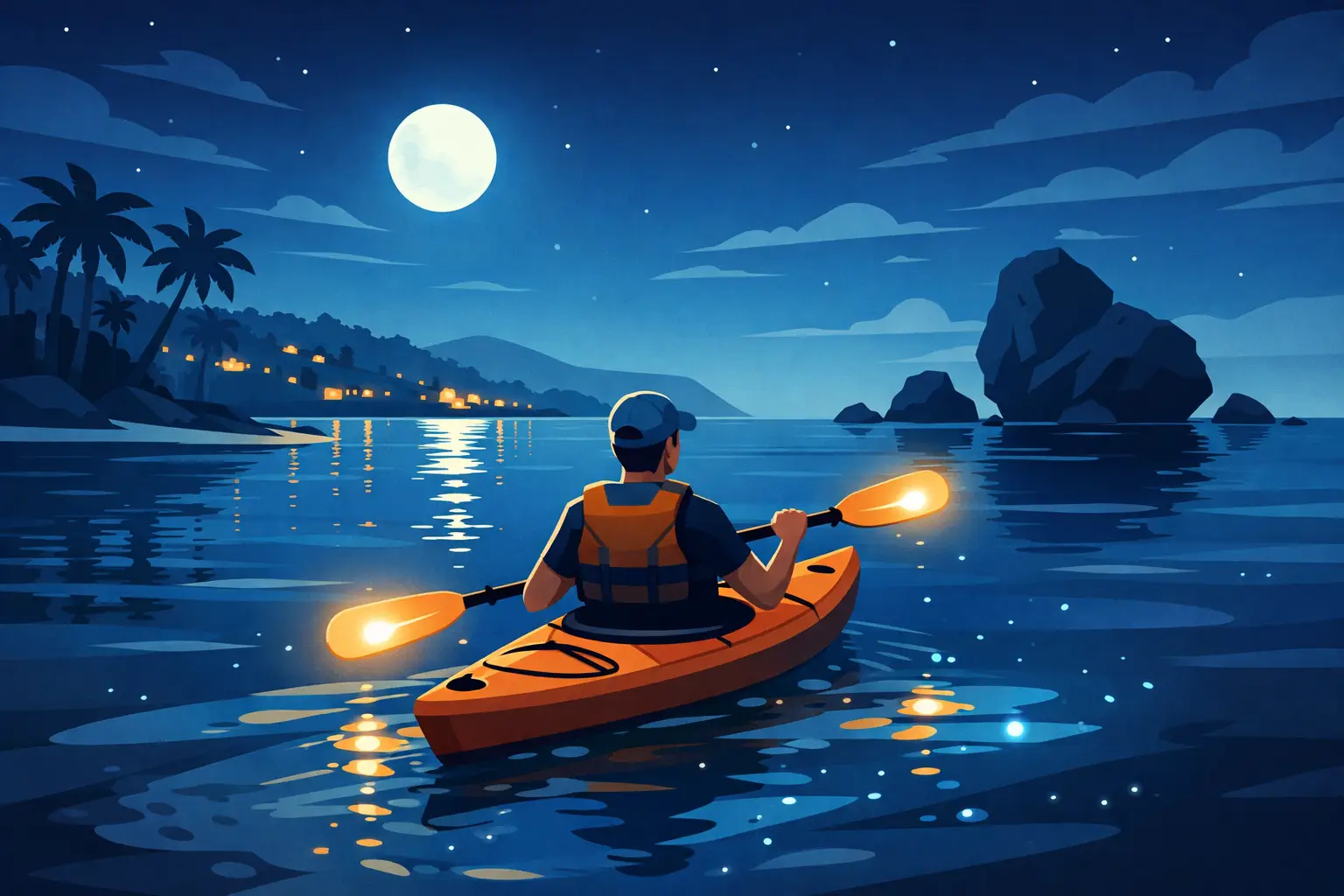

The magic of an evening paddle begins when the shoreline lights soften, the water turns glassy, and every gentle stroke carries you farther from the daytime rush. A thoughtful night kayaking safety guide keeps that moment magical, whether you are joining an LED kayak experience in Barbados or planning a quiet paddle close to shore.
Night kayaking is not simply daytime kayaking with less light. Distance is harder to judge, landmarks can disappear, and a small change in wind or current feels more significant after sunset. The reward is extraordinary: calmer waters, cooler air, a different view of the coast, and the rare pleasure of seeing the sea glow beneath your kayak. The key is choosing preparation over guesswork.
Night Kayaking Safety Guide: Begin Before Sunset
The safest night paddle starts while there is still daylight. Arrive early enough to see the launch area, understand where you will return, and take note of fixed landmarks such as a beach access point, hotel lights, or a clearly visible point along the coast. What looks familiar by day can feel completely different once the sky darkens.
Before entering the water, check the marine forecast, wind direction, tide timing, and any local advisories. In Barbados, conditions can vary across short stretches of coastline. A sheltered bay may offer a gentle, welcoming launch while an exposed beach nearby has more wind, swell, or current. If the forecast is unsettled, rescheduling is the polished choice, not a missed adventure.
Tell someone on land where you are going, when you expect to be back, and who is in your group. On a professionally guided excursion, the team should have a clear plan for the route, group size, communication, and weather decisions. For independent paddlers, this plan is your responsibility.
Choose a Route That Stays Simple
At night, the best route is rarely the most ambitious one. Stay close to a familiar shoreline, avoid open-water crossings, and choose a launch and landing point with easy access. A short, scenic loop is more enjoyable than a long route that leaves you tired, disoriented, or paddling against a growing breeze.
Avoid channels, marina entrances, fishing areas, and places where boat traffic may be active. Powerboats may not expect a kayak in their path, and even a well-lit kayak can be difficult to see against a shore full of lights. Give docks, moored vessels, and rocky edges plenty of room.
Group paddling adds comfort and visibility, but it only works when the group stays together. Keep a pace that suits the least experienced paddler. If one person needs a break, the group pauses in a safe area rather than leaving them to catch up in the dark.
Let Your Guide Set the Pace
For visitors and first-time night paddlers, a guided experience removes much of the uncertainty. Expert guides know which conditions are suitable, where the water is most protected, and how to keep a group coordinated without taking away the sense of freedom. TideTales Water Sports designs its LED kayaking experiences around that balance: vivid Caribbean atmosphere supported by attentive, safety-led hosting.
A guide’s briefing should feel clear and practical. Listen for the route, boundaries, signals, what to do if you become separated, and how the team will respond if weather shifts. Ask questions before launch. Once you are on the water, confidence comes from knowing the plan.
Be Seen Without Ruining the Atmosphere
LED lighting can turn a kayak into a floating work of art, illuminating the water and making the experience wonderfully photogenic. It also has a safety role, helping your group remain visible to one another. Still, decorative lights are not a replacement for proper navigation and safety lighting where local rules require it.
Carry a reliable white light, such as a waterproof flashlight or headlamp, and know how to use it without shining it directly into another paddler’s eyes. A headlamp with a red-light setting can preserve your night vision while you adjust equipment or check a map. Keep the light secured to your person or kayak, not loose in a pocket.
Visibility works both ways. Bright shore lights can make it difficult to see darker sections of water, while moonlight can create reflections that disguise obstacles. Slow down when approaching an unfamiliar area. If you cannot clearly identify what is ahead, do not paddle toward it.
Wear the Gear That Gives You Options
A personal flotation device is non-negotiable. Wear it properly fitted from launch to landing, even if you are a strong swimmer and even if the water looks calm. A kayak can drift quickly after a capsize, and darkness makes it harder to orient yourself or assist someone else.
For a typical warm-water evening paddle, bring or wear:
- A properly fitted personal flotation device
- A waterproof light and a backup light
- A whistle or other sound-signaling device
- A fully charged phone in a secure waterproof case
- Drinking water and a light layer for cooler breezes
Secure loose items before you launch. Phones, keys, sandals, and cameras should be tethered or stored in a dry bag. Leave valuables ashore whenever possible. The more time you spend reaching for an item in the dark, the less attention you have for your surroundings.
If you wear glasses, consider a retainer. If you take medication or need an inhaler, keep it accessible and protected from water. Small details are easy to overlook at a resort, but they matter once you are offshore after sunset.
Paddle With Calm, Deliberate Technique
Efficient paddling is a safety skill. Use smooth, controlled strokes rather than fast, splashy movements that tire you out. Keep your body centered, look toward where you want to travel, and avoid sudden leaning to photograph the water or reach for something beside the kayak.
If you feel unsteady, stop paddling and regain your balance before continuing. There is no prize for rushing. A calm pause often helps you notice the wind, current, and position of the group more clearly.
Should your kayak capsize, stay with it. Your flotation device keeps you buoyant, and the kayak is much easier for others to spot than a swimmer alone. Alert your guide or group with a whistle, light, or voice. Do not attempt to swim for shore unless a trained leader specifically directs you to do so and the distance is clearly safe.
Respect Fatigue, Weather, and Changing Conditions
Even calm nights can change. A breeze may build, clouds can reduce moonlight, or a current can become more noticeable on the return leg. Pay attention early. If you are working harder than expected, feel chilled, or have trouble holding your line, speak up right away.
Alcohol and kayaking do not mix. A sunset drink may be part of a relaxed vacation day, but a night paddle requires balance, judgment, and quick reactions. Save celebratory refreshments for after you are safely back on land.
Marine life deserves the same respectful distance at night as it does during the day. The Caribbean’s underwater world is part of the experience, especially when LED lights reveal movement beneath the surface. Do not chase, touch, feed, or corner animals. Give turtles, fish, rays, and resting birds room to move naturally, and never paddle over coral or through shallow areas just for a closer look.
Know When to Skip the Paddle
The most experienced water people are comfortable changing the plan. Skip or postpone a night kayak outing if lightning is possible, winds are rising, surf is breaking at the launch, visibility is poor, or you are feeling unwell, exhausted, or anxious. This is especially true for beginners, families with younger children, and anyone unfamiliar with the area.
There is also a personal comfort test. If the idea of being on dark water makes you tense before you launch, choose a guided, well-lit, near-shore experience or enjoy the coastline from land that evening. Adventure should feel exhilarating, not forced.
A beautiful night on the water is built from small, smart choices: a route you understand, gear you can rely on, people who stay close, and the confidence to turn back when conditions ask you to. When the paddles are stowed and the shoreline comes into view, you should carry home the glow of the experience, not the strain of having pushed too far.