
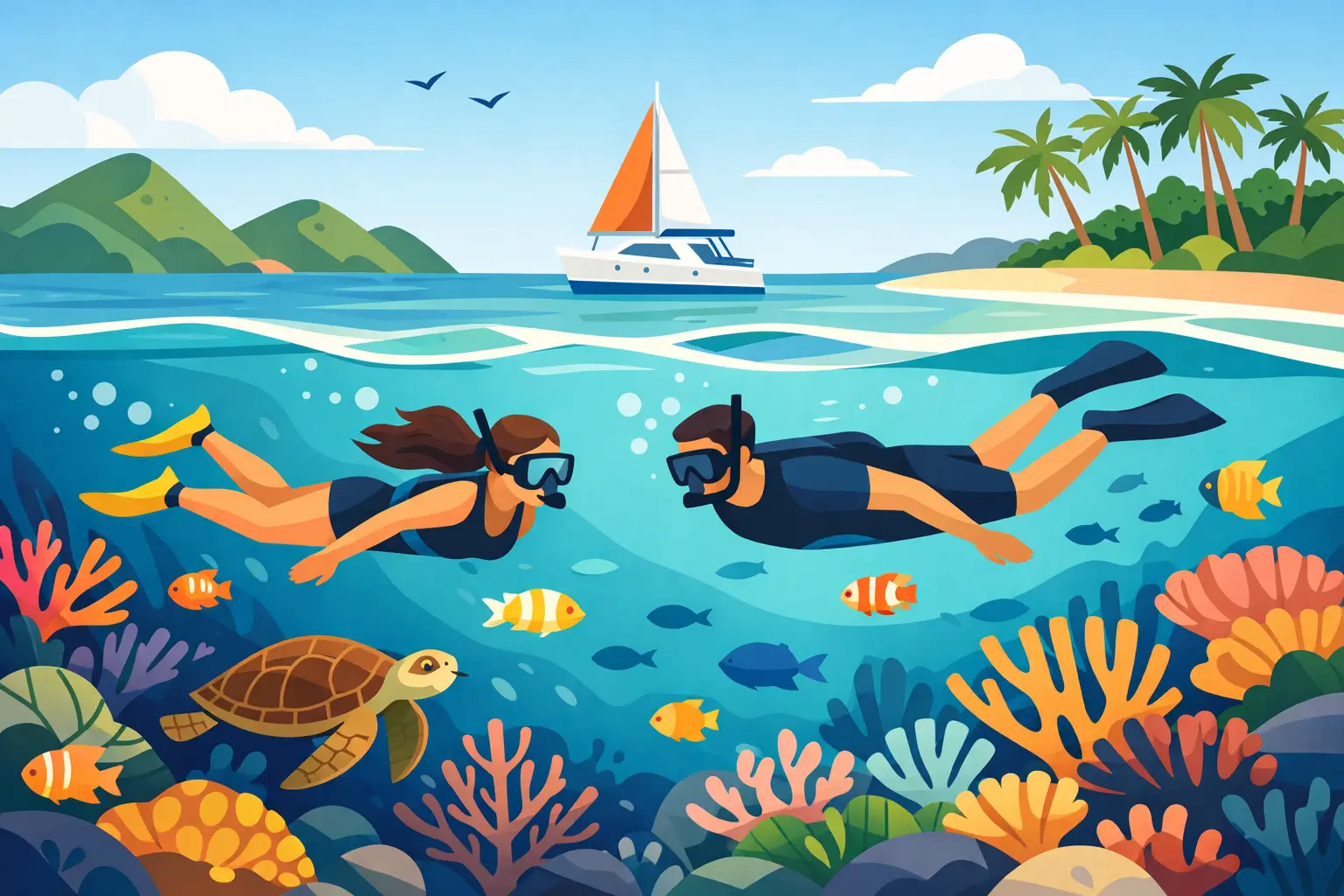

A sea turtle rises for air just beyond the boat. Below, a reef flickers with silver fish, soft sea fans, and bright flashes of blue. Coral safe snorkeling helps keep that moment as vivid for the next guest as it is for you – and it takes far less effort than most travelers expect.
Barbados rewards unhurried ocean time. Its clear Caribbean water makes even a first snorkel feel cinematic, whether you are floating above a shallow reef or following a guide toward a historic shipwreck. The best way to enjoy it is simple: arrive curious, move gently, and let the underwater world set the pace.
What Coral Safe Snorkeling Really Means
Coral safe snorkeling is the practice of observing reefs without touching, standing on, feeding, chasing, or otherwise disturbing marine life. It also means making thoughtful choices before you enter the water, from how you protect your skin from the sun to how you choose a guided excursion.
Coral may look like rock from the surface, but it is a living colony of tiny animals. A hand placed on a coral head, a fin scrape in shallow water, or one person standing up to adjust a mask can damage fragile tissue that took years to grow. Even dead-looking reef structure can shelter young fish, crabs, and other small marine life.
The goal is not to make your vacation feel restrictive. Quite the opposite. When you float calmly instead of reaching for every photo, you start to notice the details: parrotfish grazing, sand rippling in the sun, a ray moving quietly along the seafloor. Respect creates a better encounter.
Start With Smart Sun Protection
A glowing Barbados afternoon calls for sun protection, especially when water reflects light from every direction. But sunscreen labels can be confusing. Terms such as “reef-safe” are not regulated consistently, so a label alone is not a guarantee of low environmental impact.
For snorkeling days, physical barriers are often the most practical first step. Wear a long-sleeve rash guard, a wide-brim hat before and after your swim, and seek shade on board when you can. Covering up reduces how much product you need while keeping you comfortable through a full day on the water.
When sunscreen is needed on exposed skin, choose a mineral formula that uses non-nano zinc oxide or titanium dioxide, and apply it well before entering the sea so it has time to set. Avoid sprays near the water, where product can drift directly onto the surface. It is a small travel habit with a meaningful upside for the coast you came to enjoy.
Keep Your Distance, Even When the View Is Incredible
The clearest water can create a false sense that the reef is farther away than it is. Before you begin snorkeling, take a moment to judge the depth and current. If you are close to coral, keep your body horizontal and use slow, compact kicks. Long, forceful fin strokes can send you into the reef or stir up sand that settles over coral.
A respectful viewing distance also gives wildlife room to behave naturally. Turtles, schools of fish, and rays are not there to perform for the camera. Never touch a turtle, hold a starfish, chase a fish into a crevice, or crowd an animal to capture a close-up. Use your zoom, wait patiently, and let the moment come to you.
This is especially relevant around shipwrecks and reef edges, where fish often gather in large numbers. The scene may feel like an open-air aquarium, but it is a working habitat. Your calm presence is the best invitation to see more.
Photograph Without Getting Too Close
Underwater photos are worth taking, but not at the expense of the reef. Check your buoyancy before lifting your camera, keep both fins clear of the bottom, and skip any shot that requires resting a hand on coral or sand. If conditions are choppy, it may be better to enjoy the encounter than fight for a perfect frame.
A thoughtful photo still tells a beautiful story: your mask at the surface, sunlight across turquoise water, a turtle seen at a respectful distance. The most memorable images tend to feel spacious, not staged.
Choose Guidance That Protects the Experience
For beginners, guided snorkeling is more than a convenience. It is an easy way to learn how to enter the water safely, clear a mask, use fins efficiently, and recognize when a site is too shallow or conditions have changed. For experienced swimmers, a knowledgeable crew can point out marine life and reef features you might otherwise miss.
A quality operator should brief guests on marine etiquette before the swim, provide well-maintained equipment, monitor weather and sea conditions, and avoid overcrowding sensitive areas. Small details matter: a controlled entry, a clear buddy system, and guides who know where to position the group can prevent accidental contact with the reef.
At TideTales Water Sports, the aim is to pair that reassurance with the pleasure of a polished Barbados day on the water – time to swim, take in the coastline, and return to the boat feeling looked after rather than rushed.
Leave Nothing Behind, Take Nothing Home
The ocean does not need souvenirs from its floor. Shells, coral fragments, and sand dollars can all play a role in the marine ecosystem, even when they appear empty. Leave them where they are and bring home the photographs and stories instead.
Before boarding, secure loose items such as snack wrappers, hair ties, plastic caps, and waterproof phone pouches. Wind can turn a tiny item into marine debris in seconds. If you bring water or a drink, a reusable bottle or cup is a better choice than single-use plastic.
There is also one rule that deserves a clear mention: do not feed fish. Feeding changes natural behavior, concentrates animals in one place, and can make a healthy reef feel less wild. The thrill of seeing marine life on its own terms is much greater anyway.
Know When to Pause or Change Plans
A coral-conscious snorkel is also a safe snorkel. If you are tired, anxious, or struggling with your mask, signal your guide and take a break. Pushing through discomfort can lead to panicked movements, poor fin control, and unnecessary contact with the reef.
Conditions matter, too. Wind, swell, visibility, and current can shift quickly around an island. A site that is perfect for floating one morning may not be the right choice later in the day. Trust your crew if they recommend a different location or adjust the plan. Flexibility protects both guests and the marine environment.
Families should give children extra space and support. A flotation device, patient instruction, and a shorter first swim can turn nervous splashing into real confidence. There is no prize for going farthest from the boat. The best snorkel is the one where everyone feels relaxed enough to look down and be amazed.
Let the Reef Be the Main Event
There is a particular kind of luxury in being welcomed into a world you do not own. You float above it for a while, marvel at its color and movement, then leave it exactly where it belongs. That is the heart of coral safe snorkeling.
Bring a cover-up, move slowly, follow your guide, and give every turtle and coral head the space it deserves. Barbados will supply the warm water, bright horizon, and stories worth carrying home. Your care helps ensure the reef remains part of the view for years to come.