
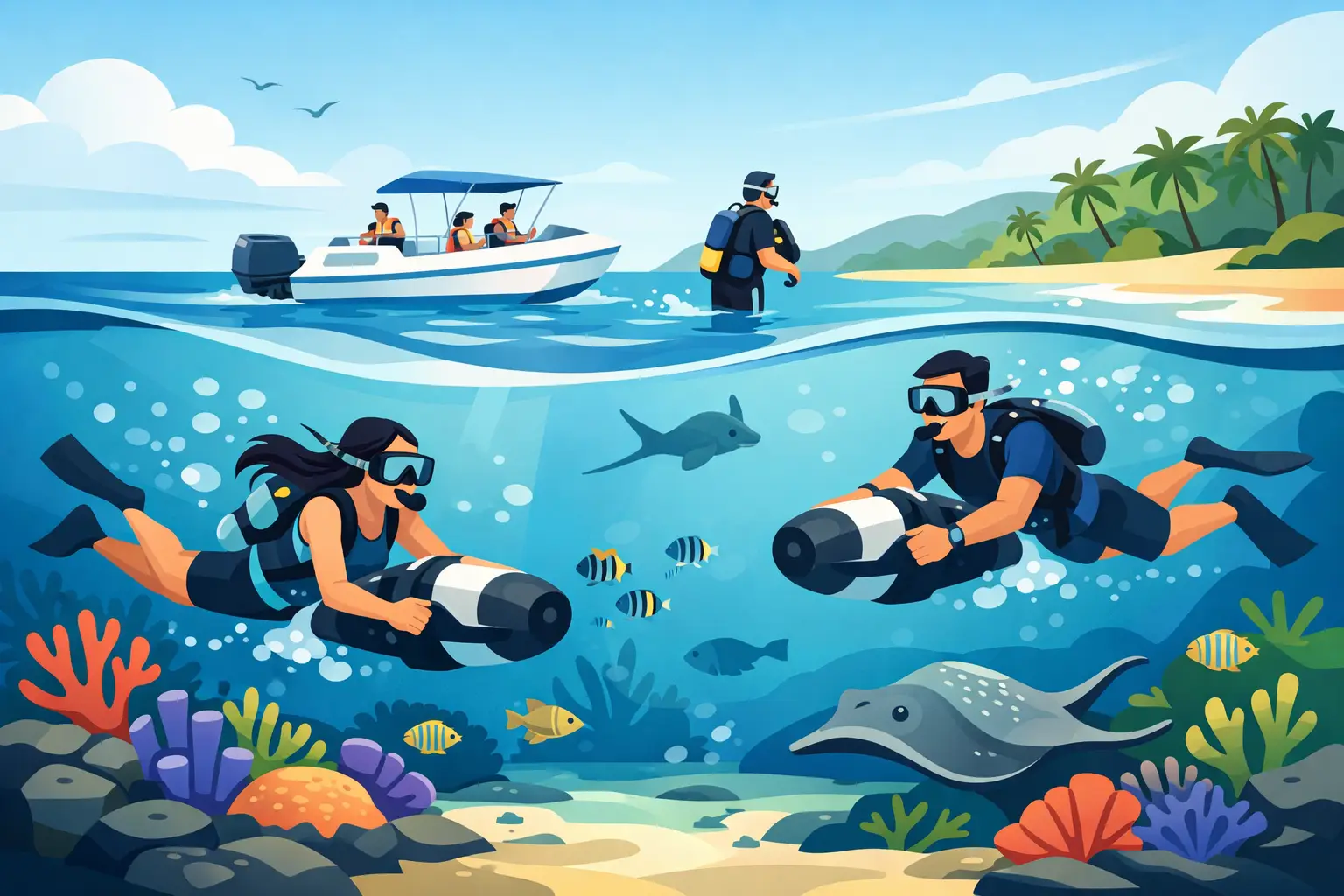

The moment you press the trigger on a sea scooter, the reef stops feeling like something you are simply floating above. You begin to glide through clear Caribbean water with gentle power at your hands, following your guide past coral gardens, schools of silver fish, and the shifting blue of Barbados’ coastline. For travelers wondering how sea scooter tours operate, the answer is reassuringly simple: expert guidance, easy-to-use equipment, and a carefully planned underwater route make the experience accessible without losing its sense of adventure.
A guided sea scooter outing is not a race and it is not a technical diving course. It is a curated snorkeling experience designed to help guests cover more water comfortably, spend less energy kicking, and enjoy the underwater world at an unhurried pace. Whether you are planning a memorable couples’ excursion, a family ocean activity, or an elevated day on the water with friends, knowing what happens before, during, and after the ride can help you arrive ready for the fun.
How Sea Scooter Tours Operate From Shore to Reef
Most sea scooter tours begin before anyone enters the water. Guests meet their guides, get acquainted with the plan for the session, and receive equipment suited to the day’s conditions. Depending on the experience, the group may depart from shore or be brought by boat to a selected snorkeling site where the water is clear, the route is appropriate for the group, and marine life has the best chance to make an appearance.
The choice of location matters. Barbados offers calm, inviting stretches of sea, but ocean conditions are never identical from one day to the next. Guides consider wind, swell, visibility, currents, weather, and each guest’s comfort level before confirming the route. A premium tour should feel effortless to the guest, but that ease comes from thoughtful planning behind the scenes.
Once at the water, the guide explains how the sea scooter works. These compact, battery-powered devices pull a swimmer gently through the water. Guests hold the handles, keep their arms extended, and squeeze the triggers to activate the motor. Releasing the trigger stops the propulsion. There is no complicated steering system to learn – a small shift in body position and hand direction is usually enough to guide the scooter where you want to go.
Before setting off, guests typically practice in shallow or calm water. This is the ideal time to become familiar with starting, stopping, turning, and maintaining a comfortable position. Most first-time riders find the learning curve surprisingly quick. The key is to relax rather than fight the water or grip the device too tightly.
The safety briefing sets the pace
The briefing is what turns a fun water activity into a professionally managed experience. Your guide will cover how to fit and clear a snorkel mask, how to stay close to the group, what hand signals mean, and what to do if you need assistance. You will also learn how to keep a respectful distance from coral, sea life, and other guests.
Participants are usually asked to follow a few straightforward rules: do not touch the reef, do not chase marine life, never point the scooter toward another person, and stay within the guide’s designated route. These guidelines protect both guests and the underwater environment. They also make the experience more peaceful. A reef is far more captivating when everyone moves through it with care.
Life jackets or flotation support may be available or required depending on the operator, location, and individual swimmer confidence. Masks, snorkels, and fins are commonly included, while exposure protection may be recommended if conditions call for it. If you are not a confident swimmer, say so early. A quality operator can advise whether the specific tour is a good fit, offer added support where appropriate, or recommend another ocean experience better suited to your comfort level.
What the Ride Feels Like Underwater
Sea scooters are often called underwater scooters or diver propulsion vehicles, but the feeling is closer to being gently towed through a living aquarium. Rather than using all your energy to fin across a snorkeling site, you can focus on the details that make Barbados’ waters so memorable: a parrotfish grazing near coral, sunlight rippling over the sand, or a sea turtle passing calmly beyond the reef.
Guides lead at a pace that lets the group remain together and enjoy the surroundings. The scooter provides propulsion, but it does not remove the need for awareness. You still control your direction, watch your depth, and keep an eye on your guide. For most tours, guests remain near the surface or at shallow snorkeling depths rather than descending deeply. That makes the activity approachable for beginners while preserving the thrill of moving freely through open water.
Speed can vary by model and operating setting, though a guided experience is rarely about going as fast as possible. A slower glide gives you more time to observe and helps prevent accidental contact with the reef. It also keeps the group comfortable, especially when guests have different swimming abilities. The best moments often happen when the pace drops: hovering above a colorful reef section, pausing to watch a curious fish, or simply taking in the stillness beneath the surface.
Why a guide matters
It is possible to rent water equipment in many destinations, but a guided sea scooter tour delivers more than the device itself. Your guide knows the site, reads changing water conditions, and points out marine details that are easy to miss. They can adjust the route if visibility changes, help a nervous first-timer settle in, and keep the group moving with confidence.
That local knowledge is particularly valuable in Barbados, where a short distance can make a noticeable difference in water conditions and what you are likely to see. A guide may choose a reef for its calm entry, a sheltered bay for beginners, or a deeper-blue route for experienced snorkelers seeking a little more adventure. The exact itinerary depends on the day, which is part of responsible ocean tourism rather than a compromise.
The Equipment Behind the Experience
Sea scooters are designed for water use, but they still require proper handling and routine care. Reputable operators inspect their units, check battery readiness, and make sure safety features are functioning before guests use them. Many models include protected propellers to reduce the risk of contact, as well as automatic shutoff systems that stop the motor when the triggers are released.
The guide will show you where to hold the scooter and how to keep loose items away from moving parts. Long hair should be secured, and jewelry, loose straps, or flowing cover-ups are best left out of the water. These small preparations keep the ride comfortable and prevent distractions once you are enjoying the reef.
Equipment is only part of the picture. A polished tour also considers the details around the water time: a clear meeting point, attentive assistance with gear, a place to store personal belongings, fresh drinking water, and time to regroup afterward. At TideTales Water Sports, that hospitality-minded approach is part of what makes an ocean activity feel like a vacation highlight rather than another item on an itinerary.
Who Can Enjoy a Sea Scooter Tour?
Sea scooter tours appeal to more people than many travelers expect. You do not need to be an advanced snorkeler, a strong free diver, or someone who spends every weekend in the ocean. Guests who are comfortable putting their face in the water and following guidance can often enjoy the experience, provided the conditions and tour requirements are right for them.
That said, it is not ideal for everyone. Very young children may not meet age or size requirements, and guests with certain medical conditions, recent injuries, pregnancy concerns, or significant anxiety in open water should speak with the operator before booking. Comfort in the water matters more than bravado. There is no prize for pushing through a level of discomfort that prevents you from enjoying the reef.
For couples, sea scooters create a shared, cinematic kind of adventure – close enough to exchange a glance through your masks, independent enough to feel like you are each flying underwater. For friend groups, they bring playful energy to a beach day without requiring everyone to have the same athletic ability. Families often appreciate that the scooters reduce fatigue, allowing more attention for the marine life that children and adults alike will talk about long after the towels are dry.
Preparing for a Better Ocean Day
Come rested, hydrated, and ready to listen. A light meal beforehand is usually more comfortable than arriving either hungry or overly full. Apply reef-conscious sun protection well before entering the water, and bring a towel, swimsuit, and dry change of clothes. If you are prone to motion sickness and the tour involves a boat ride, plan ahead with advice from a medical professional.
Leave expectations flexible when it comes to wildlife. Barbados’ sea life is wonderfully photogenic, but it is wild. Turtles, rays, and tropical fish follow their own rhythms, and no responsible guide should promise a particular animal on command. What can be promised is the opportunity to experience the sea with more freedom, more comfort, and a deeper appreciation for the world beneath the waves.
Choose a tour that treats safety, local knowledge, and reef respect as part of the luxury. When the equipment is well maintained and the guidance is calm and personal, you are free to do the one thing you came to Barbados for: look down, glide forward, and let every wave hold a story.