
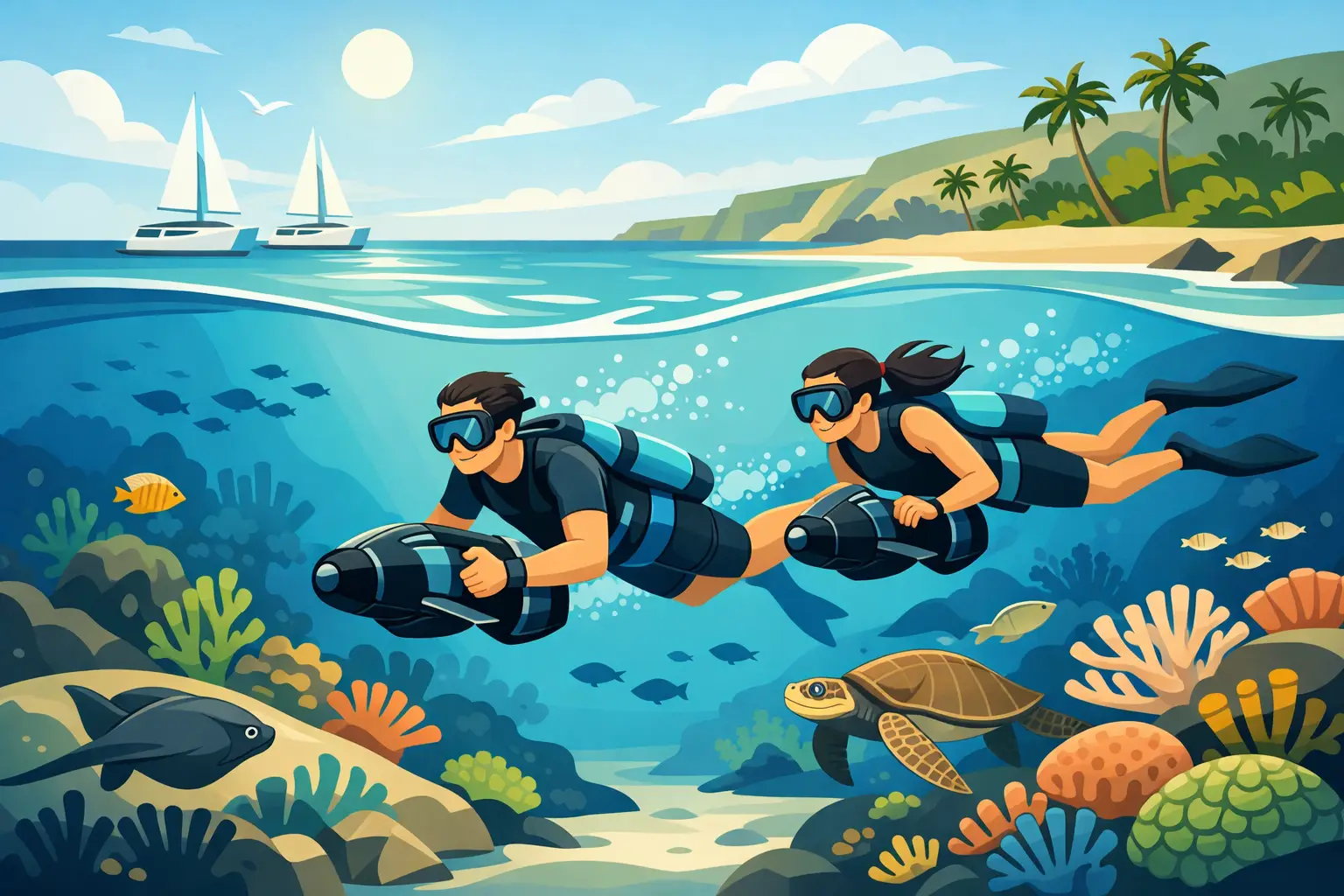

The first gentle pull of a sea scooter is a special kind of vacation moment. One second, you are floating above Barbados’ clear blue water. The next, you are gliding quietly over coral formations, curious reef fish, and the sandy contours of the Caribbean seabed. Sea scooter operation is wonderfully simple for beginners, but the best experience comes from knowing how to handle the equipment with calm, control, and respect for the ocean.
A guided outing turns that first try into something far more memorable than a quick swim with a motorized device. It gives you the confidence to move at an easy pace, see more of the underwater world, and stay focused on the sights that make Barbados snorkeling so extraordinary.
What a Sea Scooter Changes Underwater
A sea scooter, also called an underwater scooter or diver propulsion vehicle, is a handheld, battery-powered unit that gently pulls a swimmer through the water. You hold its handles, press the trigger controls, and let the scooter provide forward momentum. Rather than kicking constantly to cover distance, you can relax your legs and enjoy a smoother view of the reef.
That difference matters on a warm Caribbean day. Snorkeling is accessible and rewarding on its own, but a scooter can help guests who are comfortable in the water explore a wider area without feeling rushed or fatigued. It is especially appealing for couples, families with confident older children, and friend groups who want a little more energy and playfulness in their ocean time.
The goal is not speed. The most beautiful sea scooter moments happen at a measured pace, when you can spot a parrotfish grazing near coral, watch silver fish move as one, or pause above a shipwreck feature without stirring up the seabed. Think of it as a front-row glide through Barbados’ underwater scenery.
Sea Scooter Operation: The Essentials Before You Go
Before entering the water, your guide should introduce the scooter’s controls, safety features, and intended route. Premium guided experiences begin with that briefing because comfort on the surface leads to confidence below it.
Most sea scooters have two handles and dual triggers. The scooter only moves when both triggers are engaged, which helps prevent accidental starts. Release either trigger, and the motor stops. Your guide will also explain how to hold the unit in front of you, how to keep the propeller area clear, and what to do if your mask needs attention.
The right body position makes a noticeable difference. Extend your arms comfortably rather than locking your elbows, and allow your body to trail behind the scooter in a long, relaxed line. Keep your head neutral, looking ahead and slightly down. If you pull the scooter too close to your chest or try to force it downward, the ride can feel less stable.
Start slowly. A controlled first glide lets you understand the scooter’s buoyancy and response before you travel farther from the boat or shoreline. In calm water, most guests find the technique intuitive within a few minutes. If you feel tense, pause, float, and reset. There is no prize for being the fastest person in the water.
A Smooth Start in Barbados Waters
Conditions shape every ocean experience. Barbados often offers invitingly clear water, but currents, wind, waves, and visibility can vary by coastline and season. An experienced crew will choose locations and routes appropriate for the day, then adjust the plan if the water calls for a more sheltered approach.
Once you are in the water, take a moment to settle your mask, snorkel, fins, and flotation equipment before engaging the scooter. You should be able to breathe comfortably, clear your mask if needed, and communicate with your guide using the agreed hand signals. This is a small investment of time that protects the rest of your adventure from avoidable interruptions.
When it is time to move, squeeze both triggers gently and let the scooter pull you forward. Avoid kicking hard against the scooter’s motion. Light fin movements are fine for balance or positioning, but the machine is there to do the work. Relaxed legs also help preserve your energy for swimming, sightseeing, and enjoying the water after the ride.
Turning is usually as easy as angling the scooter in the direction you want to go. Make broad, gradual turns rather than sharp movements. Around a reef, slow changes of direction give you better control and help keep a respectful distance from coral and marine life.
How Deep Should You Go?
For many guests, the ideal experience is near the surface with a snorkel, where sunlight dances across the seabed and the water feels open and bright. Some scooters are suitable for deeper use, but depth should always be determined by the equipment, your experience level, the guide’s instructions, and the conditions that day.
If you are snorkeling, avoid trying to force yourself downward with the scooter. Descents require proper equalization skills and should only be part of an activity designed for capable, supervised participants. A beautiful reef scene is no less spectacular from the surface, and staying shallow often provides the clearest, most relaxed view.
Safety Is Part of the Luxury
The finest ocean adventures feel carefree because the details are handled thoughtfully. That includes well-maintained equipment, a clear briefing, attentive guides, and routes chosen with guest ability in mind. Sea scooters are designed to be approachable, but they are still powered water-sports equipment and deserve focused handling.
Keep long hair, loose straps, and dangling accessories away from the propeller intake. Never point the scooter toward another guest, and leave plenty of space between scooters so everyone has room to turn or stop. If you need assistance, release the triggers, signal your guide, and float calmly.
Guests should also be honest about their comfort in the water. A sea scooter can make snorkeling less physically demanding, but it does not replace basic water confidence. If you are nervous in open water, have difficulty using a snorkel, or are recovering from an injury, tell the crew before departure. The right guidance may mean extra flotation, a gentler location, or choosing a different activity that better suits your day.
Protecting the Reef While You Glide
A sea scooter offers a rare chance to cover ground without kicking close to the coral, but that convenience comes with responsibility. Coral is alive, fragile, and easily damaged by contact. Keep a clear buffer between yourself, the scooter, and the reef, even when a colorful fish tempts you closer for a photo.
Never stand on coral, chase turtles, feed fish, or reach into crevices. Marine life is most captivating when it behaves naturally, without pressure from visitors. Move slowly, observe quietly, and let the underwater world set the pace.
Good buoyancy is the heart of reef-friendly sea scooter operation. Stay horizontal when possible, watch where the scooter is traveling, and be particularly mindful in shallower sections where waves can shift your position. A thoughtful guide will lead you through the areas where you can enjoy the view without crowding sensitive habitats.
Who Will Enjoy a Sea Scooter Experience?
Sea scooters are a strong fit for travelers who want snorkeling to feel more expansive and adventurous without requiring scuba certification. They can be ideal for active couples looking for a shared story beyond the beach, groups celebrating a special trip, and families seeking an activity that feels exciting while remaining guided and approachable.
They are not the perfect choice for everyone. Guests who are uncomfortable putting their face in the water may prefer a boat cruise, paddle board session, or another surface-level experience. Those hoping for a fast, thrill-ride sensation may also be surprised by the controlled pace. The real appeal is not racing through the sea. It is having more time and range to appreciate it.
For guests who enjoy both polish and play, a curated sea scooter outing can fit beautifully into a Barbados day on the water. After the exhilaration of gliding over a reef, there is something especially satisfying about climbing back aboard, drying off, sharing the sightings you almost missed, and savoring the island from a fresh perspective.
A little technique goes a long way, but curiosity is the best thing to bring with you. Hold steady, move gently, follow your guide, and let every blue-water moment unfold at its own unforgettable pace.