
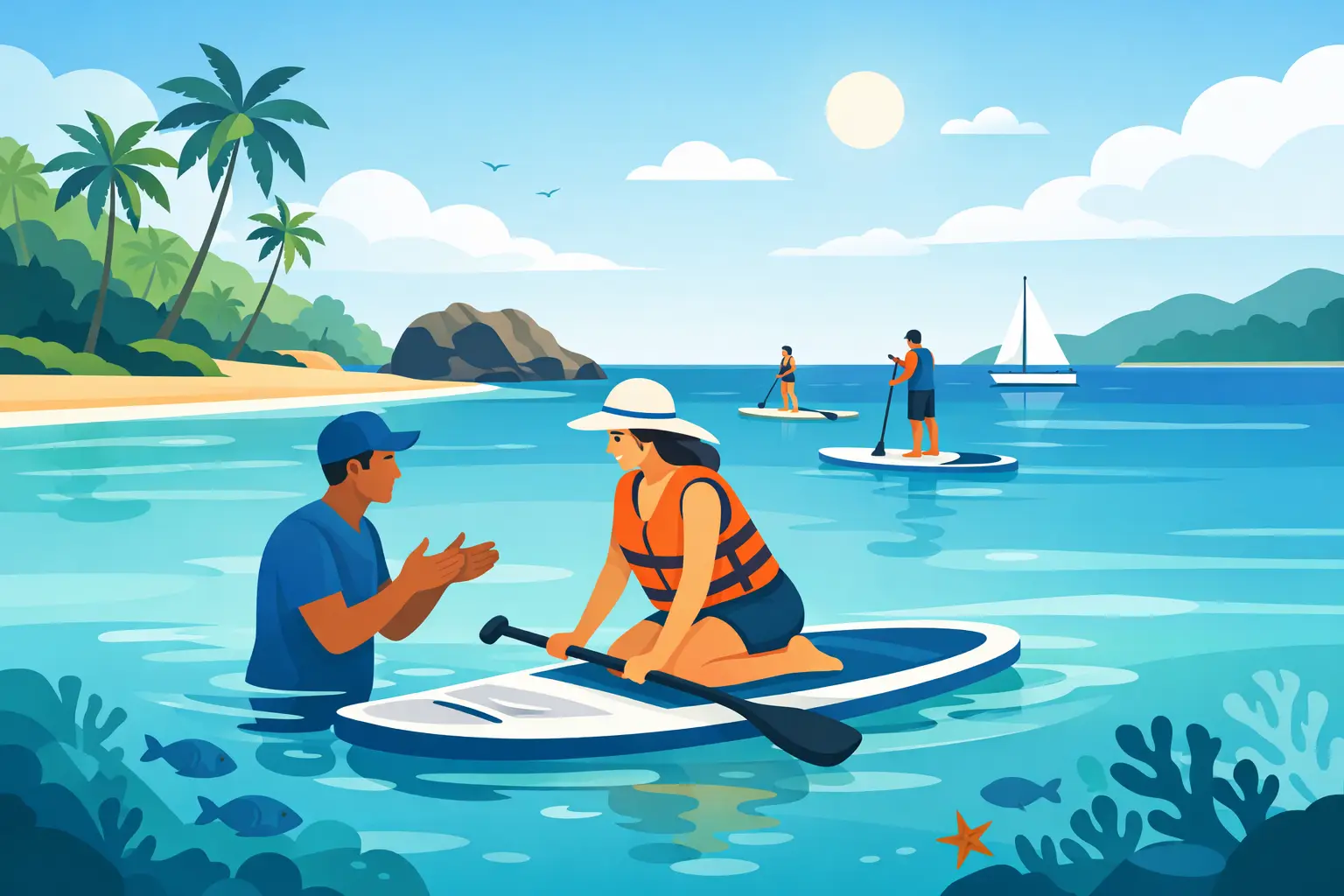

The thought of standing on a board above clear Caribbean water can feel equal parts irresistible and intimidating when you are not a confident swimmer. So, can non swimmers paddleboard? Yes, often they can – provided the experience is designed for beginners, conditions are calm, and safety comes before the photo opportunity.
Paddleboarding is not a swimming lesson, and nobody should pretend otherwise. You may fall in, and being comfortable around water is always an advantage. But on a well-managed, guided session in sheltered water, many non-swimmers find stand-up paddleboarding surprisingly approachable. The board is wide, stable, and buoyant. You begin close to shore, wear a properly fitted flotation device, and learn at a pace that lets you settle into the moment.
In Barbados, that can mean gliding over bright blue water with the coastline in view, sunshine on your shoulders, and an experienced guide nearby. The goal is not to prove anything. It is to enjoy a memorable ocean experience with sensible support around you.
Can Non Swimmers Paddleboard Safely?
For many guests, the answer is yes, with the right setting and the right expectations. A non-swimmer should paddleboard only when the operator has assessed the day’s conditions and confirmed that the experience is suitable. Calm, protected water is very different from open ocean swell, a windy afternoon, or an area with boat traffic.
A quality beginner session starts with equipment that makes balancing easier. Look for a broad, stable board rather than a narrow performance model. A personal flotation device, often called a life jacket, should fit snugly and be worn throughout the activity. A leash is also useful in appropriate conditions because it keeps the board close if you come off it. That board is a large floating platform, and staying connected to it matters.
Guidance is the other essential piece. Before heading out, an instructor should explain how to carry the board, how to get on from shallow water, where to place your feet, and how to hold the paddle. You should also know what to do if you fall: stay calm, keep hold of or return to the board, and climb back on from the side or tail as instructed.
No reputable provider should pressure a guest to continue if they look distressed, if the water becomes choppy, or if their comfort level changes. Choosing to kneel, sit, or head back in is not failing the experience. It is good decision-making.
Why Paddleboarding Can Feel More Manageable Than Expected
The biggest surprise for many first-timers is that you do not have to stand immediately. Beginning on your knees lowers your center of gravity and gives you time to understand how the board responds. From there, you can paddle slowly, look around, and decide whether standing feels right.
When you do stand, the movement is less dramatic than many people imagine. Keep your feet parallel and about shoulder-width apart, bend your knees slightly, and look toward the horizon rather than down at your toes. Small, smooth paddle strokes help more than forceful ones. The board will feel steadier once it is moving gently forward.
There is also a mental benefit to a board beneath you. Unlike treading water, you have a visible, buoyant surface to return to. That can make a major difference for someone who does not swim. Still, confidence is personal. A guest who feels panicked in water, even while wearing flotation, may be better served by a different marine activity or by enjoying the coastline from a boat first.
Start With the Right Barbados Conditions
Barbados offers beautiful water, but the sea is not identical every hour of every day. Wind, currents, tides, and exposure to the Atlantic can change the character of a session. For non-swimmers, timing and location are part of the safety plan.
Morning conditions are often calmer, though this is never guaranteed. Sheltered bays and nearshore areas are generally more forgiving than exposed stretches of coast. An experienced local crew knows where conditions are best suited to beginners and when it is wiser to postpone, relocate, or choose another activity.
That local judgment is worth far more than trying to force an outing because it was on your vacation checklist. The most polished water experiences leave room for nature to set the pace. If the breeze picks up, a relaxed cruise, snorkeling with flotation support, or an evening LED kayak experience may be a better fit for the day.
Choose Guided, Not Independent, for Your First Time
A casual rental can sound appealing, but it asks you to make safety decisions you may not yet understand. Where should you launch? How far is too far? What does the wind mean for the return journey? What happens if you drift or become tired?
A guided experience removes much of that guesswork. The crew can set boundaries, keep the group in a suitable area, offer real-time coaching, and respond quickly if anyone needs help. It also makes the experience feel less like a test and more like what a Barbados vacation should be: time to enjoy the sea without carrying all the logistics yourself.
At TideTales Water Sports, guided ocean experiences are built around that balance of adventure, attentive hospitality, and informed supervision. For a first-time paddler, that thoughtful structure can turn nerves into one of the standout memories of the trip.
What to Tell Your Guide Before You Go
Be direct about your swimming ability. There is no prize for minimizing your concern, and clear information helps the crew support you properly. Tell them whether you cannot swim at all, can float but are nervous, or simply have not been in deep water for years.
It also helps to mention motion sickness, recent injuries, pregnancy, a fear of deep water, or any medical condition that could affect your comfort or balance. These details do not automatically rule you out. They help determine whether paddleboarding is appropriate and what adjustments may be useful.
Ask how deep the water will be, whether the route stays close to shore, what flotation equipment is provided, and whether you may remain kneeling for the entire session. A good operator will answer plainly, never make you feel awkward, and give you permission to opt out before you are already on the water.
A Simple First-Ride Plan for Non-Swimmers
Keep your first paddleboard session uncomplicated. Wear swimwear you can move in, use sun protection, and avoid bringing loose valuables onto the board. Listen closely during the safety briefing, especially when the guide explains falling and remounting.
Start in shallow water where you can stand if permitted by the guide and conditions. Climb onto the board on your knees, take a few relaxed strokes, and get used to the feeling. There is no requirement to stand. Some guests spend the whole outing kneeling or sitting and still enjoy the scenery, the movement, and the peaceful perspective of being out on the water.
If you choose to stand, do it when the board is pointing away from shore and steady. Rise one foot at a time, keep your knees soft, and focus ahead. If your legs shake, that is normal. Lower yourself back to your knees whenever you need to reset.
Should you fall, the key is not to rush. Your flotation device supports you, and your board remains your primary float. Follow the guide’s instructions, approach the side of the board, and pull yourself back aboard. Knowing the plan ahead of time often takes much of the fear out of the possibility.
When Paddleboarding May Not Be the Best Choice
There are days when the smartest answer is not today. Strong winds, rough water, lightning risk, or fast-moving currents can make paddleboarding unsuitable for beginners of any swimming level. The same applies if you are feeling unwell, extremely anxious, or unable to follow the safety instructions.
For travelers who want the ocean atmosphere without the balance challenge, a guided kayak can be a more comfortable starting point. A boat charter offers another beautiful way to experience Barbados from the water, with the added ease of shade, refreshments, and a crew close at hand. The island’s coastline is spectacular from more than one vantage point.
Your first paddleboard experience does not need to look like a social media reel. It can be ten calm minutes on your knees in a sheltered bay, a few confident strokes, and the quiet realization that the Caribbean feels a little more accessible than it did when you arrived.